At The Collage Collective, we believe that every artist has a story, and every story deserves to be celebrated. That’s why we’re so excited to launch our brand-new online series. It’s a heartfelt journey exploring the world of collage art told through word-based interviews.
From bold paper cuts in Bundaberg to delicate layers in London. We’re shining a spotlight on the beautifully diverse voices, visions, and techniques within the collage community. Each interview offers a glimpse into the creative minds of collage artists. Proving that there’s no one way to make a masterpiece!
Whether you’re an artist or admirer, we hope this series leaves you feeling uplifted, connected, and full of fresh ideas. Because creativity knows no borders—and every snippet, scrap, and story matters.
Read the original interview on Instagram below!
The Collage Collective: How did you get into making collage art?
M: When I was studying at the National Art School in Sydney from 2007 to 2010 I already started using Collage and Assemblage elements in my artworks.
Working purely with paper collage began when I lost all my artworks to the Bundaberg Flood in 2013. It was time for a new beginning and the repetitive nature of cutting images out of paper had a therapeutic effect on me. My first body of work was called “Nothing New” and included 25 iconic portraits made of cut up and collaged recycled postage stamps.
From that time onwards no book or magazine was safe from me. I sourced materials from local op shops and book sales and my collection consists now of nearly 3000 recycled books, not counting any magazines 😊
The Collage Collective: I know you love using big scissors, why is this? Any favourite brands?
M: When I started collaging I used a small pair of scissors, no particular brand but it seems to work for me. I tried all sorts, even cuticle scissors, but I couldn’t handle those at all.
One day I picked up a pair of KOKUYO scissors at Officeworks, purely because they were pink and I never looked back. They are a Japanese brand, cut like butter and feel great in your hand. They come in cool colours and it’s just a joy cutting pieces of paper with them.
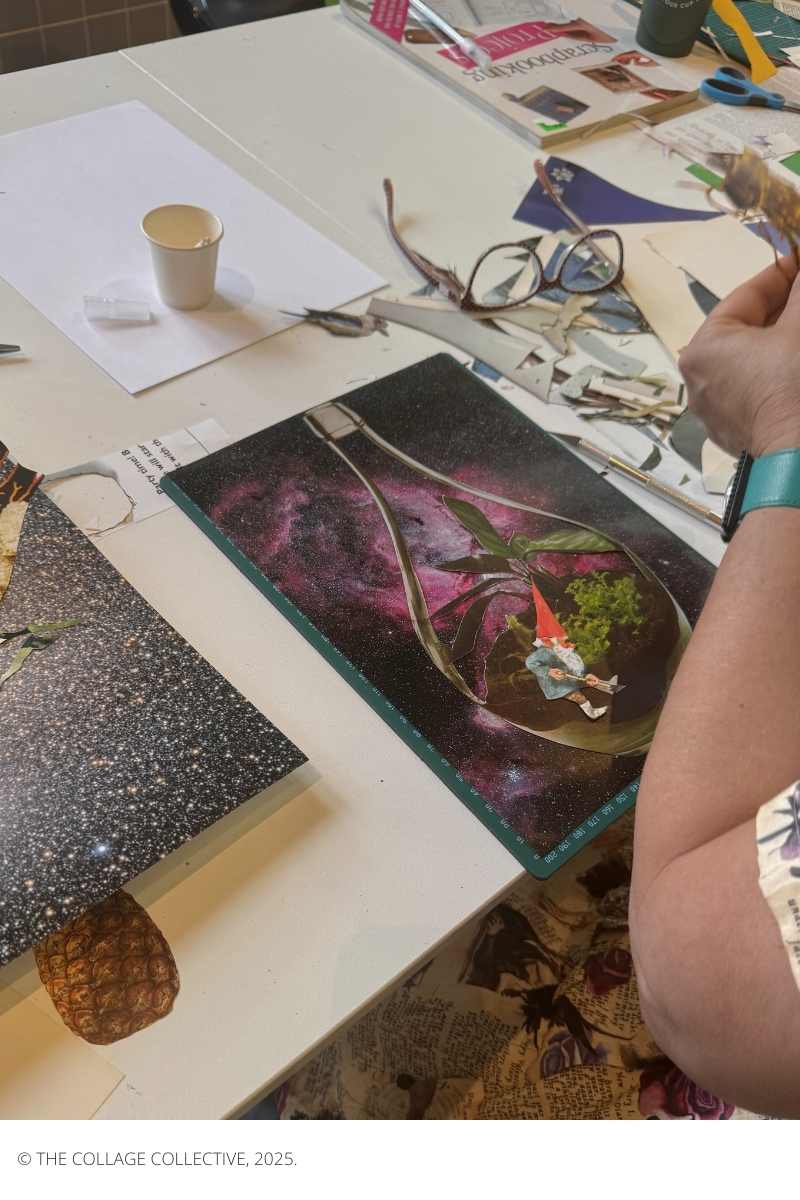
For me that’s quite important as I am an analogue collage artist, meaning I don’t use any digital trickery, just cut, cut, cut. Unfortunately, Officeworks don’t carry them anymore, but you get them online from $10 to $13 a pair. For smaller pieces and areas in between I use a x-acto knife.
The Collage Collective: What are your favourite materials?
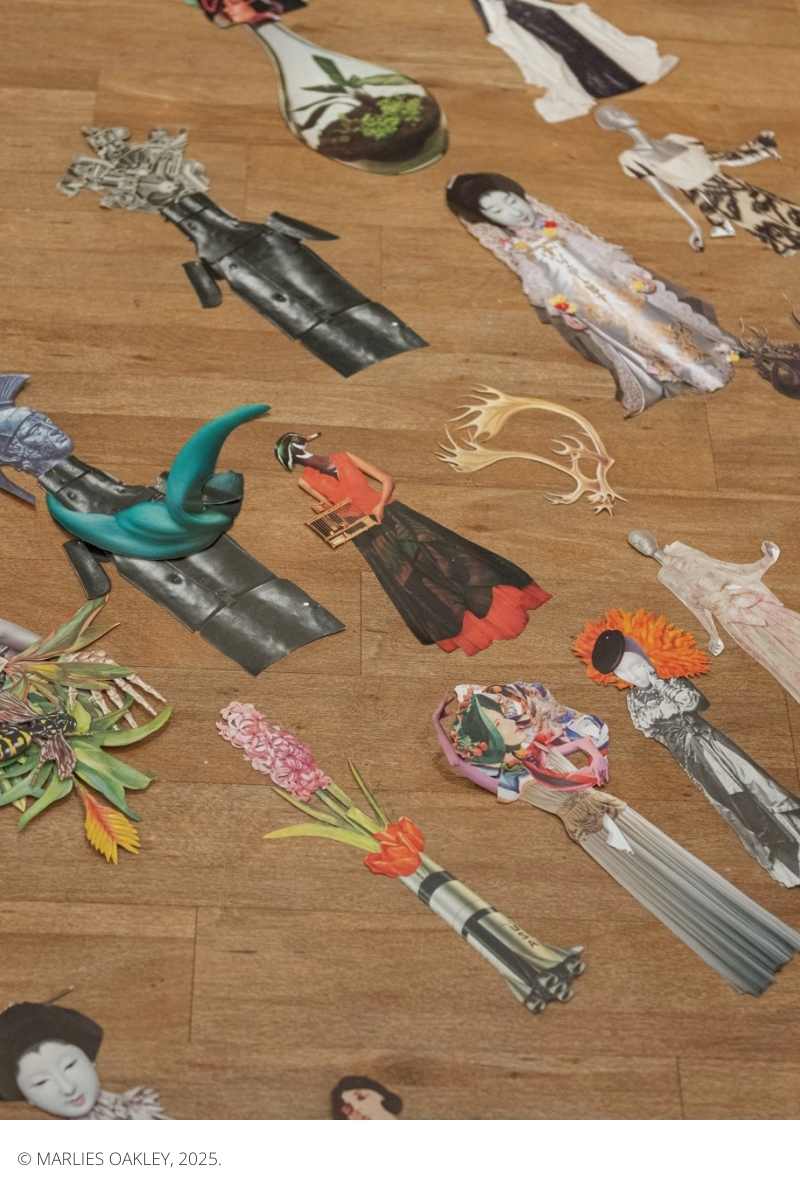
M: My favourite materials are any old books with illustrations. I prefer cutting illustrations to photographs as they have a clear outline and the cutouts look crisp around the edges. As I love telling stories in small formats I love old children’s books and children’s encyclopedias. And on top of that, the paper is much stronger.
In the meantime, I hardly use any magazines. I especially stay away from glossy paper, they crinkle and all always look too shiny when photographed. I still have got hundreds of Nat Geos which will be used in some way in the future (or for workshops)
The Collage Collective: Anything or anyone who inspires you currently or previously?
M: I admire so many collage artist’s, past and present. One of my heroes is Hannah Höch, a German collage and Dada artist. Joseph Cornell is another one of my favourites, especially as I am collaging into small matchboxes. Fred Tomaselli, an American artist, for his small cut-outs embedded in resin (talking about repetitiveness) and Miriam Wosk using old school maps to collage and sequin on.

The Collage Collective: Any tips you’d like to share?
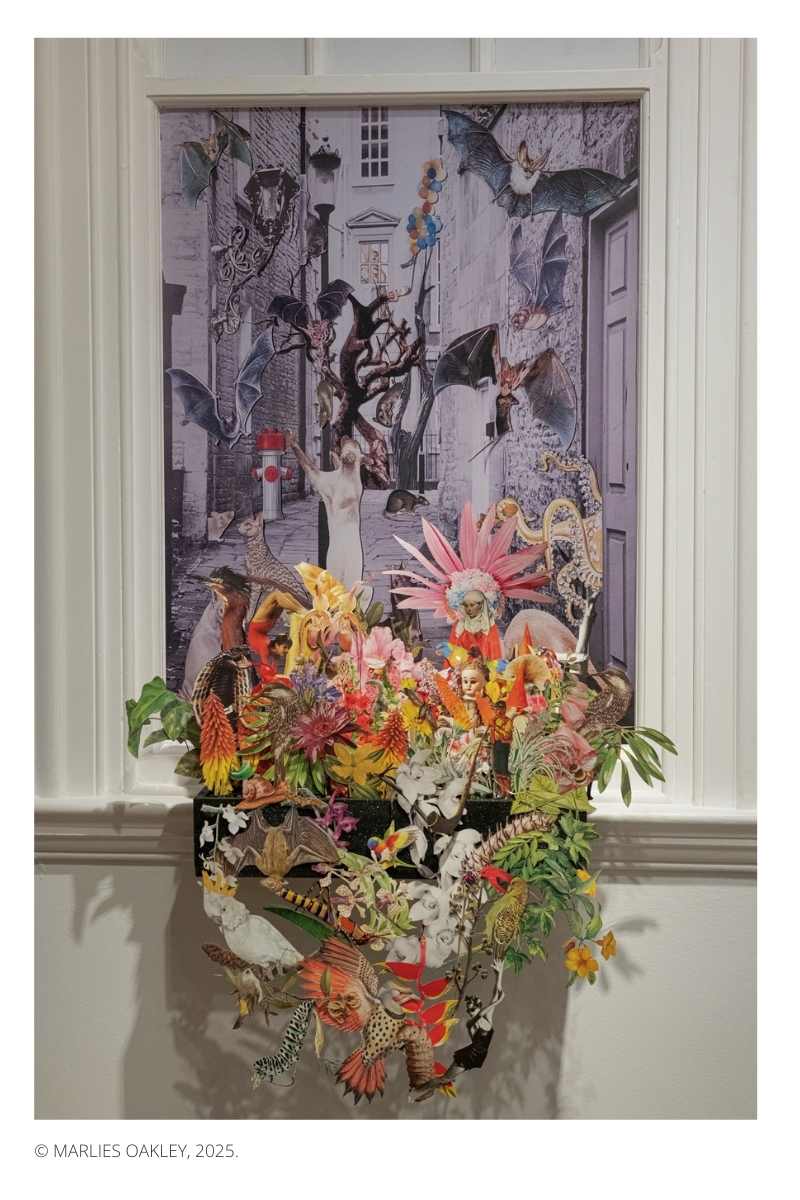
M: Don’t listen to anyone who doesn’t take collaging seriously, “it’s just cutting and glueing”, no it is not. We collage artists follow the same “rules” as any other artists with regards to composition, use of colour, story telling, etc. And you can take a 2D collage into an immersive 3D installation as I did with my recent exhibition at the Bundaberg Regional Gallery “Papiergeschichten” (paper stories).
My mantra became: “I can paint, but I prefer not to, instead my main love is ‘cutting and gluing’. The images are my paint. The scissors are my brush.” (Henry Matisse)